
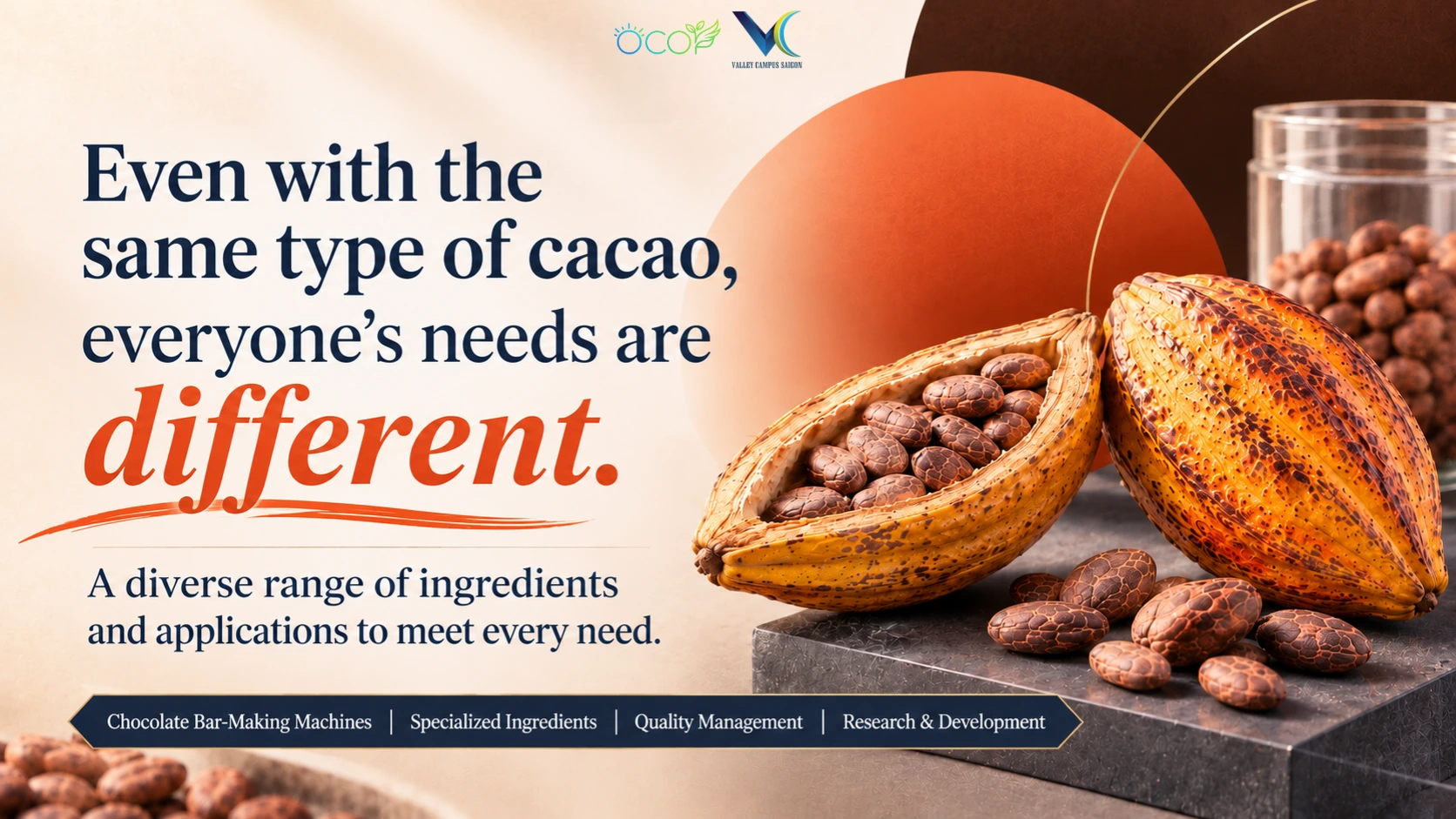
In the B2B cacao market, a raw material source is not necessarily suitable for every business. Chocolate manufacturers may focus on flavor characteristics and how the cacao can be used in their formulations, while importers also need to consider supply, raw material documentation, and the needs of their end customers.
Therefore, selecting cacao is not based solely on bean quality. Suitability also depends on whether the raw material meets the intended application and the buyer’s practical requirements.
The same cacao source may be evaluated differently by each buyer group.
1. Bean-to-Bar Makers: Finding Raw Materials That Match Their Flavor Direction
For Bean-to-Bar Makers, cacao beans are one of the factors that contribute to the characteristics of the finished chocolate. They therefore tend to focus on flavor, sensory attributes, and how the raw material performs during roasting and processing.
Each maker has its own product direction. Some businesses aim to develop a specific flavor profile, while others need to find raw materials that suit their existing chocolate lines.
Information about the growing region and post-harvest processing can help makers better understand the cacao beans before evaluating them. However, flavor descriptions are only an initial reference. Testing samples under appropriate conditions remains necessary to determine whether the raw material meets the product direction.
2. Specialty Importers: Evaluating Cacao Sources in a Market Context
For Specialty Importers, cacao selection is not only about the characteristics of the beans. They also need to consider whether the raw material source suits the customer groups they serve and their business portfolio.
In addition to quality and raw material information, factors such as origin, batch-level data, volume, pricing, and transaction terms may also influence their decisions.
A cacao source that suits the needs of one maker may not necessarily be suitable for an importer supplying raw materials to multiple customers. Each end customer may have different requirements regarding application, raw material characteristics, and purchasing conditions.
Therefore, importers need to evaluate a cacao source not only based on the raw material itself, but also on its ability to meet the needs of the market they serve.
3. QA and Procurement: Different Evaluation Criteria
In a manufacturing or importing business, the person who directly evaluates flavor may not be the person who makes the purchasing decision.
The QA department may focus on technical information, batch documentation, and the ability to cross-check data. Meanwhile, the procurement department typically considers price, volume, delivery terms, and requirements from the teams using the raw materials.
As a result, cacao selection often requires coordination across multiple perspectives. A sample that receives positive sensory feedback still needs to be assessed against relevant technical and commercial requirements. Conversely, technical documentation cannot replace the evaluation of raw materials in actual applications.
Suitability needs to be considered from both sides: the characteristics of the raw material and the conditions under which the business can use it.
4. Product Fit Is Shaped by Raw Materials, Applications, and Buyer Requirements
The suitability of a cacao source can be viewed through the connection between three factors:
Raw Material — Application — Buyer Requirements
- Raw Material: Bean characteristics, origin information, and verifiable data.
- Application: The product or intended use that the buyer is pursuing.
- Buyer Requirements: Sensory criteria, technical specifications, volume, and commercial terms.
These three factors need to be considered together. For example, a buyer developing chocolate with a specific flavor direction may prioritize sample testing and sensory evaluation. Meanwhile, an importer sourcing raw materials for multiple customers may need to clarify documentation, supply capabilities, and transaction terms.
Therefore, a single criterion should not be used to conclude that a cacao source is suitable for a particular market or customer group.
5. Understand Buyer Needs Before Introducing a Cacao Source
In B2B discussions, clarifying buyer needs helps determine what information should be provided and which aspects require further verification.
What product does the buyer intend to use the cacao for? Which raw material characteristics are important for that application? Which technical documents or batch-level data do they need to review? What are their expected volume, price range, and transaction terms?
These are not fixed criteria that apply to every business. The points to discuss will vary depending on the intended application and the requirements of each partner.
For the B2B cacao market in Japan, understanding the buyer and their intended use is an important part of evaluating commercial opportunities. Rather than introducing every cacao source in the same way, businesses need to consider the raw material within the context of their partner’s specific applications and requirements.
A Suitable Cacao Source Starts with Understanding Its User
In B2B, raw material quality is important, but suitability also depends on how the raw material will be used and the requirements the buyer needs to meet.
Bean-to-Bar Makers, Specialty Importers, and QA and procurement teams may view the same cacao source from different perspectives. When these perspectives are clarified, raw material evaluation becomes more specific and grounded — from sample selection and identifying information to verify, to reviewing the conditions before moving toward a transaction.
For VCSxOCOPGIFT, connecting Vietnamese cacao sources with B2B buyers also starts here: understanding partners’ intended applications in order to introduce raw materials and information that are relevant to their evaluation process.
🌱 OCOP GIFT – All supplies, one platform
#VCSxOCOPGIFT #CacaoB2B #BuyerEducation #CacaoJapan #ProductFit
📌 Contact Information & Connections:
- Website: https://ocop.online
📱 Follow OCOP GIFT on social media:
Line: updating
TikTok: updating
Youtube: https://www.youtube.com/channel/UCihLVEU9hDh_Ut67l0U7bSw
Instagram: https://www.instagram.com/ocop.contact.vcs/
X (Twitter): https://x.com/ocopcontactvcs
Facebook: https://www.facebook.com/profile.php?id=61590947802312
Email: marketing@vcs-ai.com
Hotline (Japanese - Vietnamese support): +84 915 878 333
Japan Office: 神奈川県藤沢市藤沢388富士ビル 5F
Vietnam Office: 76A/3, Tran Huu Trang Street, Phu Nhuan, Ho Chi Minh City.