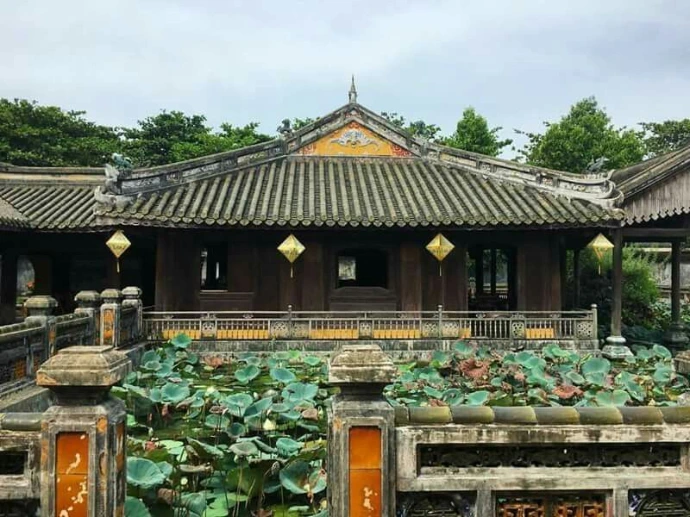
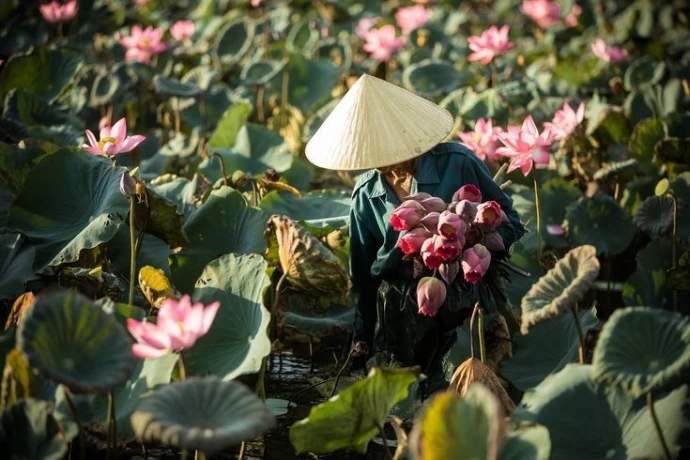
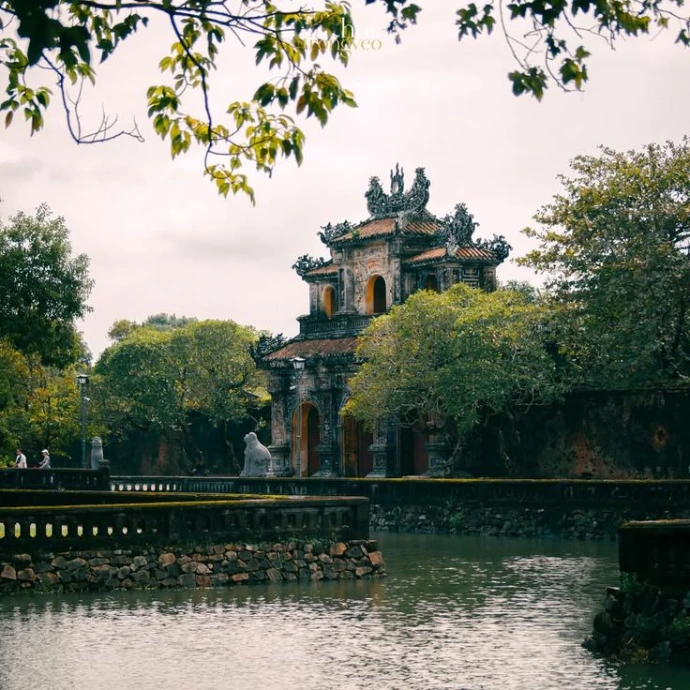
Lotus Lake in Hue - When a flower becomes a symbol of the entire region
There are regions that are remembered for a special type of crop.
With Hue, that is sen.
From the cool green lotus ponds stretching out in the summer to the familiar dishes made from lotus seeds, the image of the lotus has become a part of the lives of the people in the ancient capital through many generations.

Sen in the life of the people of Hue
In Hue, lotus flowers appear in many places.
People often lotus tea in the morning, cook lotus seed soup in the summer days and use lotus flowers on many special occasions.
Not only is it a type of crop, but the lotus is also associated with elegant lifestyle is considered a characteristic of this land.
The seasons of lotus are nurtured with patience
Growing lotus is not a job that should be rushed.
Lotus growers must monitor the water level, weather, and the right time for harvesting to ensure the quality of the seeds.
Many families in Hue have been involved in lotus farming for generations, preserving the experiences passed down from grandparents and parents.
It is that persistence that has contributed to the stable lotus seasons year after year.

Lotus seeds from Hue – A gift from the lotus ponds
After the harvest, Lotus seeds Hue is used in many familiar dishes of the Vietnamese.
From lotus seed tea, lotus seed porridge to modern teas and beverages, lotus seeds are cherished for their delicate, refreshing flavor and versatility in pairing with a wide range of ingredients.
Nowadays, many products made from lotus are being introduced to international consumers as part of Vietnamese cuisine.
More than one agricultural product
When looking at a blooming lotus pond, people often think of beauty.
But behind that beauty lies the hard work of farmers, the successive harvests, and a cultural heritage that has existed for a long time in the ancient capital region.
That is also the reason why Hue lotus always holds a special value in the hearts of many people.

The lotus pond in Hue at dawn – The most beautiful moment lasts only a few hours
If you have ever seen a lotus pond Hue at dawn, you will understand why many people consider it the most beautiful moment of the day.
When the sun has not yet appeared, the lake is covered with a thin layer of mist. The white lotus flowers are still gently closing their petals, preserving the purest fragrance after a long night.
And that is also when the lotus growers begin their work.
Just a few hours after the sun rises high, the gradually increasing temperature will cause the flowers to begin to bloom larger and lose some of their original purity.

A workday begins while the city is still asleep
Because each lotus flower has its own most beautiful moment.
In Hue, lotus is present in many aspects of life.
From lotus flowers are used for tea ceremonies, lotus seeds in traditional dishes, until the lotus ponds become a characteristic part of the landscape every summer.
For many local people, the lotus is not just a crop.
That is a part of the memory associated with the ancient capital region.

The special thing about lotus is that the most beautiful moments often do not last very long.
Perhaps that is why lotus growers always cherish each flower season.
Every early morning on the lotus lake in Hue is a brief encounter between humans and nature.
It is a place where the purest beauty appears only for a few hours before the sun rises high.
And perhaps, it is that very thing that has made Hue lotus so special.
How a lotus pond in Hue changes through the four seasons of the year
When mentioning lotus pond Hue, Many people often think of the bright summer days with white lotus flowers blooming on the surface of the lake.
That is a familiar image that appears in many travel photos, poems about the ancient capital, or in the memories of those who have visited Hue during the lotus blooming season.
But in reality, the beauty of the lotus pond is not just found in the few weeks of vibrant blooms each year, but also in the pure lotus petals, which represent a journey that lasts through all four seasons, where nature and humanity together create a persistent cycle over the years.
At each moment of the year, the lotus pond takes on a different appearance.
And each stage plays its own role in the journey of creating new lotus seasons.
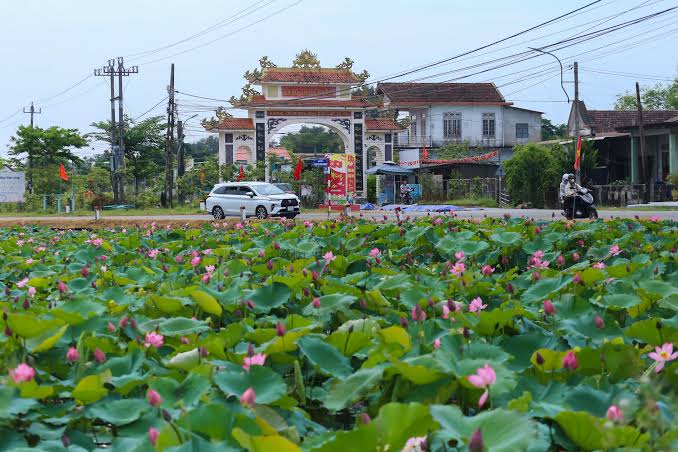 Flood season – The beginning of a new cycle
After the first rains of the season, the surface of the lake begins to change.
The water level rises, bringing with it the silt and moisture necessary for the growth of the lotus plants.
And this is the time when the young lotus buds start to emerge from the mud at the bottom of the lake.
From a distance, the lotus lake still appears quite tranquil.
But for the farmers who have been closely connected with the lotus for many years, this is an extremely important phase.
They observe the changes in the weather, monitor the water level, and prepare for a new growing season that is gradually taking shape.
Lotus Blooming Season – The Most Beautiful Moment of the Year
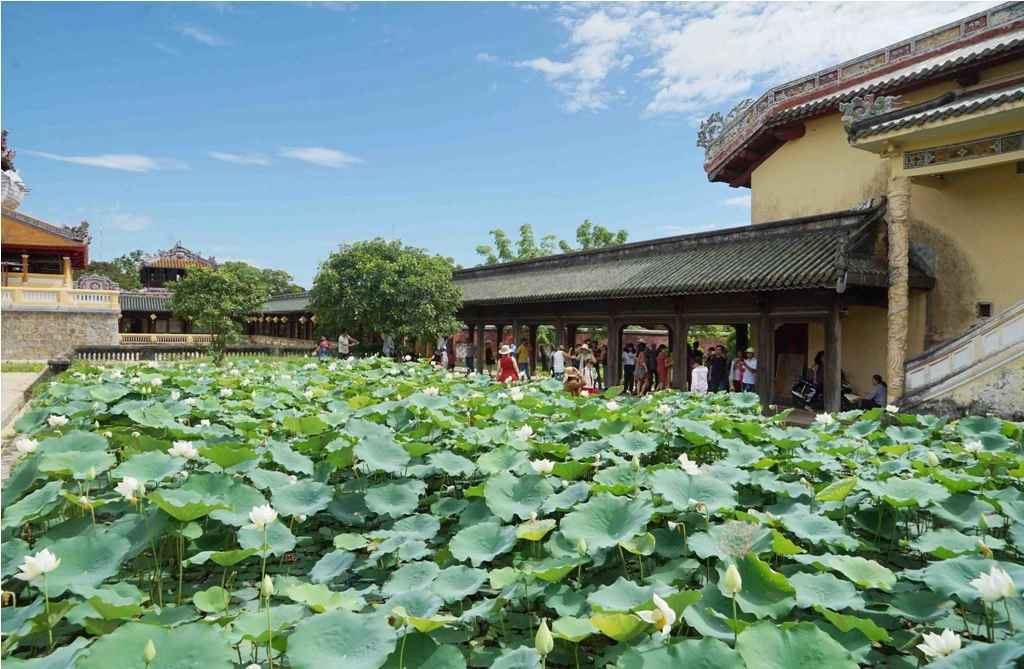
When summer arrives, the lotus pond enters its most brilliant phase.
The green leaves cover the surface of the water, interspersed with white or pink lotus flowers gradually blooming under the morning sun.
The atmosphere around the pond becomes more lively.
Local people begin to harvest lotus flowers from early morning.
Tourists come to admire the scenery and capture the most beautiful moments of the lotus season.
This is also the time when the lotus clearly demonstrates its role in the cultural life of Hue.
From the flowers used for tea enjoyment, decoration, or serving cultural activities, the lotus has become a familiar part of the ancient capital.
Not only does it hold aesthetic value, but the blooming lotus season also creates additional income for many households involved in lotus cultivation.
Lotus seed harvest season – When the real work begins
Many people think that when the lotus flowers wither, it is also the end of the lotus season.
But for lotus farmers, that is when the work enters its busiest phase.
The locals harvest each lotus pod, then separate the seeds using manual or semi-manual methods.
This is a job that requires a lot of time, patience, and experience.
Each lotus seed needs to be selected and processed carefully before being further processed or brought to market.
From these lotus seeds, many familiar products are created, such as lotus seed tea, lotus tea, lotus jam, or traditional dishes associated with Hue cuisine.
And this is also the stage where the economic value of the lotus pond is most clearly demonstrated.
Waiting Season – The Necessary Pause of Nature
After the harvest is over, the lotus pond becomes quieter.
The petals no longer cover the surface of the water as before.
The number of visitors is also gradually decreasing.
From the outside, many people might think the lotus pond is entering a period of rest.
And in fact, that is true.
This is the time for the land to recover, for the ecosystem in the pond to rebalance, and for the lotus plants to prepare for a new cycle.
Sometimes, the waiting period is necessary to create a better harvest in the future.
A cycle preserved through many generations

Like many other raw material regions in Vietnam, the value of the lotus ponds in Hue lies not only in the final products but also in the resilience preserved through many generations of local people.
From caring for the lotus ponds, harvesting flowers, separating seeds, to preserving traditional farming experiences, all contribute to creating a unique identity for this land.
Perhaps that is why the lotus in Hue always carries a special meaning.
Not just a crop or an agricultural product, the lotus has become a symbol of elegance, resilience, and connection to the culture of this ancient capital.
And each lotus season that returns is also the time when that story continues to be told.
OCOP GIFT – All supplies, one platform
Contact Information & Connections:
- Website: https://ocop.online
Follow OCOP GIFT on social media:
- Line: updating
- TikTok: updating
- Youtube: https://www.youtube.com/channel/UCihLVEU9hDh_Ut67l0U7bSw
- Instagram: https://www.instagram.com/ocop.contact.vcs/
- X (Twitter): https://x.com/ocopcontactvcs
- Facebook: https://www.facebook.com/profile.php?id=61590947802312
- Email: marketing@vcs-ai.com
- Hotline (Japanese - Vietnamese support): +84 915 878 333
- Japan Office: 神奈川県藤沢市藤沢388富士ビル 5F
- Vietnam Office: 76A/3, Tran Huu Trang Street, Phu Nhuan, Ho Chi Minh City