
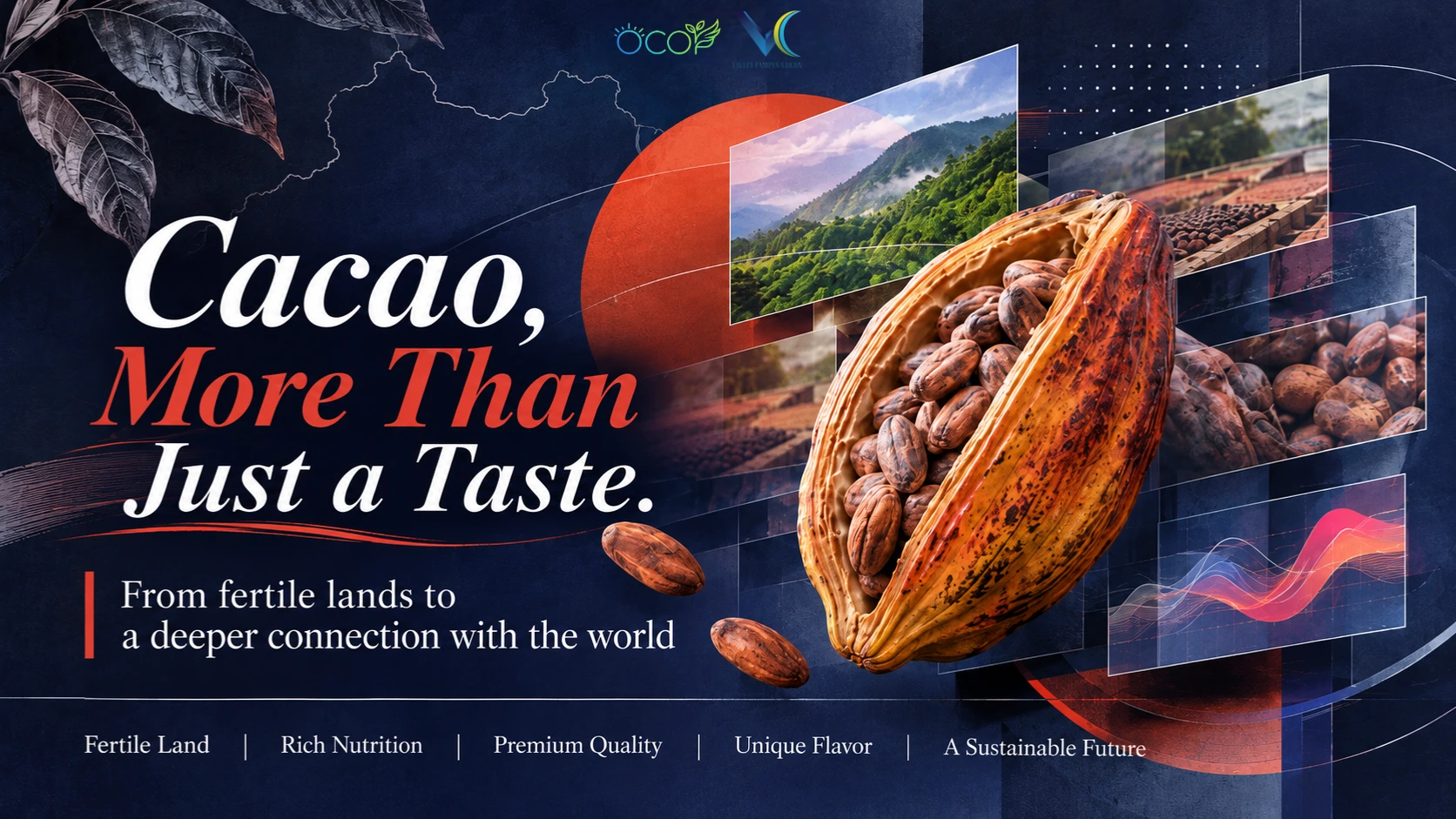
When selecting cacao for a chocolate product, buyers look beyond the raw beans in front of them. Behind every cacao batch lies a journey from the growing region and post-harvest processing to the actual characteristics of the beans. Each stage provides a piece of information that helps businesses better understand the raw material they are considering.
For B2B cacao, this information should go beyond origin introductions or flavor descriptions. It needs to be considered alongside batch-level data and actual evaluation results, giving buyers a basis for discussing technical requirements and assessing the suitability of the raw material for their products.
1. Growing Region: Where Does the Cacao Come From?
Origin is the starting point for buyers to understand a type of cacao. However, the name of a locality or growing region is not enough to determine bean quality. What matters is how the raw material source is identified, whether the information is recorded for each batch, and to what extent buyers can verify that data.
Under VCS's cacao sourcing strategy, Cát Tiên is the primary source, while Châu Đức serves as a supplementary source. Distinguishing sources by batch helps avoid treating cacao from different areas as a single, uniform raw material.
Therefore, the question is not only “Where does the cacao come from?” but also “How is the information about this cacao source identified and recorded?”
2. Post-Harvest Processing: How Has the Cacao Been Processed?
After harvesting, cacao undergoes further processing before becoming a raw material for chocolate production. Among these stages, fermentation and drying are important to consider because they are related to the characteristics of the beans after processing.
However, knowing only the name of the fermentation method or drying process is not enough to evaluate quality. Actual results still need to be assessed for each raw material batch, along with information on how the process is monitored and controlled.
When communicating with suppliers, buyers can explore the following questions: Which factors are recorded during processing? Are the records linked to a specific bean batch? How can the data be compared with the sample currently being evaluated?
This is also a key focus of VCS's direction: developing capabilities in post-harvest process control rather than relying on ownership of growing regions.
3. Cacao Bean Batch: Evaluating the Specific Raw Material
Information about the growing region and processing methods provides context, but buyers still need to examine cacao beans at the batch level to make an assessment.
A batch can be evaluated through its physical characteristics, flavor profile, sensory evaluation results, post-harvest processing information, and traceability data. These factors complement one another: sensory evaluation helps buyers understand how the sample expresses itself, while technical documentation and batch-level information support raw material verification.
One important point is that a sample receiving a positive evaluation does not mean subsequent batches will have similar characteristics. To assess consistency, data from multiple batches and corresponding evaluations are needed.
4. Flavor and Application Potential: Is the Raw Material Suitable for the Product?
For chocolate manufacturers, cacao evaluation is not limited to reviewing the available information about the raw material. Buyers also need to understand whether the beans are suitable for their intended application and product direction.
For example, they may be interested in sensory characteristics after roasting, how the sample performs during testing, or its compatibility with a formulation under development. Evaluation criteria may therefore vary depending on the product and each buyer's requirements.
A flavor description or information about the growing region can help guide sample selection, but it cannot replace actual testing results. Application potential needs to be verified through the business's own evaluation process.
5. Data and Evidence: A Basis for Verifying Information
The layers of information about raw material sources, processing methods, and bean characteristics become more meaningful when supported by appropriate documentation. Depending on the raw material and buyer requirements, the information to be considered may include:
- Batch-level information: Identifies the sample and raw material being evaluated.
- Process records: Provides information on how the cacao was processed after harvesting.
- Technical data: Supports the evaluation of raw material characteristics.
- Sensory evaluation: Records the flavor characteristics of the sample.
- Traceability information: Supports the verification of origin and data related to the bean batch.
Not every cacao source has all of these types of documentation readily available. The level of detail and verification requirements may vary depending on the raw material, supplier, and buyer standards.
For cacao intended for the Japanese market, technical documentation, batch-level data, and actual evaluation results are important foundations for discussions with business partners. Quality or flavor-related claims should also be supported by appropriate data and verification, rather than relying solely on positioning messages.
From Raw Material Information to an Informed Selection
A cacao source cannot be evaluated solely through the name of its growing region or an individual bean sample. When information about origin, post-harvest processing, batch characteristics, and evaluation results is considered together, buyers can gain a more comprehensive understanding of the raw material before making a decision.
This is also how VCS approaches B2B cacao: progressively connecting cacao sources from Cát Tiên and Châu Đức with post-harvest processing, batch-level evaluation, and traceability information. These data provide a basis for more specific discussions with partners about raw material characteristics and product development requirements.
🌱 OCOP GIFT – All supplies, one platform
#VCSxOCOPGIFT #CacaoB2B #VietnameseCacao #CacaoTraceability
📌 Contact Information & Connections:
- Website: https://ocop.online
📱 Follow OCOP GIFT on social media:
Line: updating
TikTok: updating
Youtube: https://www.youtube.com/channel/UCihLVEU9hDh_Ut67l0U7bSw
Instagram: https://www.instagram.com/ocop.contact.vcs/
X (Twitter): https://x.com/ocopcontactvcs
Facebook: https://www.facebook.com/profile.php?id=61590947802312
Email: marketing@vcs-ai.com
Hotline (Japanese - Vietnamese support): +84 915 878 333
Japan Office: 神奈川県藤沢市藤沢388富士ビル 5F
Vietnam Office: 76A/3, Tran Huu Trang Street, Phu Nhuan, Ho Chi Minh City.