
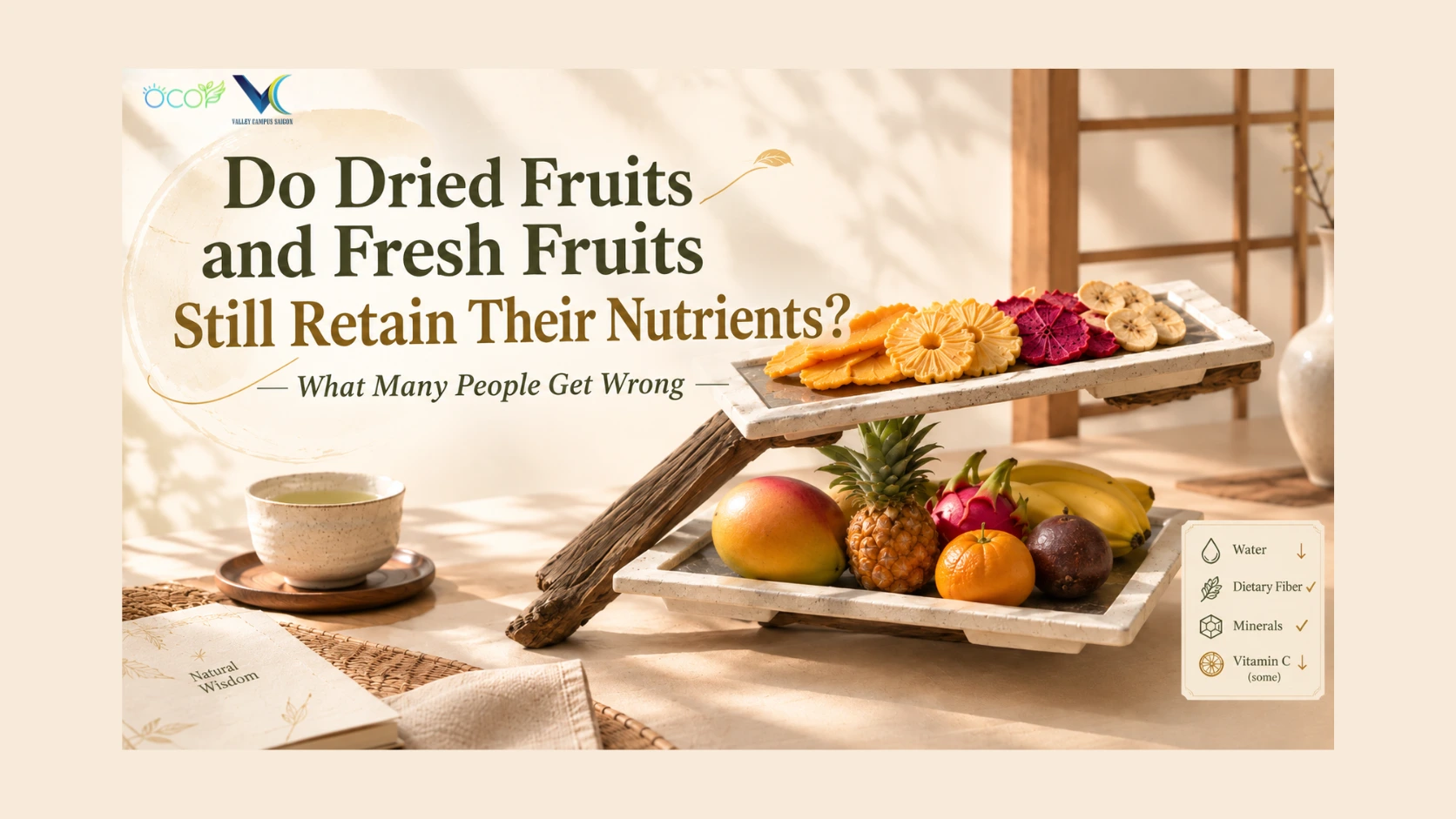
Do dried fruits still have nutrients? Common misconceptions many people have
In recent years, dried fruit has become a familiar choice for many people. From golden mango slices, fragrant pineapples, crispy dried bananas to other tropical fruits, this product is increasingly appearing in gift boxes, gift baskets, and even in daily snacks.
However, many people still have concerns: "After undergoing the processing, does dried fruit still retain its original nutritional value?"
The answer is yes, but it is not exactly the same as fresh fruit.
So what happened when the fruit was dried?
The majority of the weight of fresh fruit is water. Depending on the type, the water content can account for up to 80–90% of the fruit's weight.
During drying, this water is removed to extend shelf life and make the product easier to transport. As a result, the flavor of the fruit becomes more intense, the sweetness is more pronounced, and the texture also changes significantly.
It is important to note that this process primarily reduces the water content rather than causing all the nutrients to disappear. Many nutritional components are still retained in the product after the drying process is completed.
The nutritional values are still maintained
One of the nutrients that is retained quite well after the drying process is fiber. As the water content decreases, the fiber content in the same weight of the product becomes more concentrated, making dried fruit a popular choice for snacks.
In addition, many minerals such as potassium, magnesium, and some other trace elements remain relatively stable during processing. This is why dried fruit is still considered a product with certain nutritional value rather than just a snack.
Moreover, the characteristic colors and flavors of each type of fruit are largely preserved. These factors create a unique appeal for each product, from mangoes, pineapples, and bananas to dragon fruit and other tropical fruits.
So why are dried fruits not exactly like fresh fruits?
Although retaining many nutrients, dried fruits still have certain differences compared to fresh fruits.
Some vitamins that are sensitive to temperature and air, especially vitamin C, may decrease during processing or storage. The extent of the change depends on the drying technology, the temperature used, and the duration of the raw material treatment.
This is also why manufacturers are increasingly focusing on improving processing methods to help maintain better product quality.
Dried fruit or fresh fruit – which option is more suitable for you?
In fact, it is very difficult to determine which type is better as each product has its own advantages.
Fresh fruit offers the original flavor, abundant natural moisture, and is a suitable choice when you want to enjoy fruit in its most natural state.
On the other hand, dried fruit scores points for its convenience. The product is easy to store, easy to carry, and can be used in various situations such as at work, traveling, or as a gift.
For many people, combining both fresh and dried fruit in their daily diet is also a way to achieve balance and flexibility.
The quality of the product starts from the raw material region
A delicious dried fruit product not only depends on the processing technology but also starts with the quality of the fruit right from the time of harvest.
Fruits that are selected in the right season, reach the appropriate ripeness, and are handled carefully tend to retain their natural flavor better after drying. This is also why many businesses today focus on building stable raw material regions and consistent production processes to enhance product quality.
Behind each slice of dried fruit is not only the processing stage but also the story of the land, climate, and the farmers who have cared for the crops through each growing season.
Another way to enjoy the flavors of Vietnamese fruits
Dried fruit is not a complete substitute for fresh fruit. Instead, it is another way to preserve and enjoy familiar flavors in a more convenient form.
From mango, pineapple, and banana to many types of tropical fruits characteristic of Vietnam, each product carries the imprint of the region where it is grown. And perhaps it is the combination of natural flavors, convenience, and the story behind each harvest season that has made dried fruit increasingly popular among many people.
🌱 OCOP GIFT – All supplies, one platform
#OCOPGIFT #DriedFruit #TropicalFruit #Gifts #PremiumGifts
📌 Contact Information & Connections:
- Website: https://ocop.online
📱 Follow OCOP GIFT on social media:
Line: updating
TikTok: updating
Youtube: https://www.youtube.com/channel/UCihLVEU9hDh_Ut67l0U7bSw
Instagram: https://www.instagram.com/ocop.contact.vcs/
X (Twitter): https://x.com/ocopcontactvcs
Facebook: https://www.facebook.com/profile.php?id=61590947802312
Email: marketing@vcs-ai.com
Hotline (Japanese - Vietnamese support): +84 915 878 333
Japan Office: 神奈川県藤沢市藤沢388富士ビル 5F
Vietnam Office: 76A/3, Tran Huu Trang Street, Phu Nhuan, Ho Chi Minh City.