
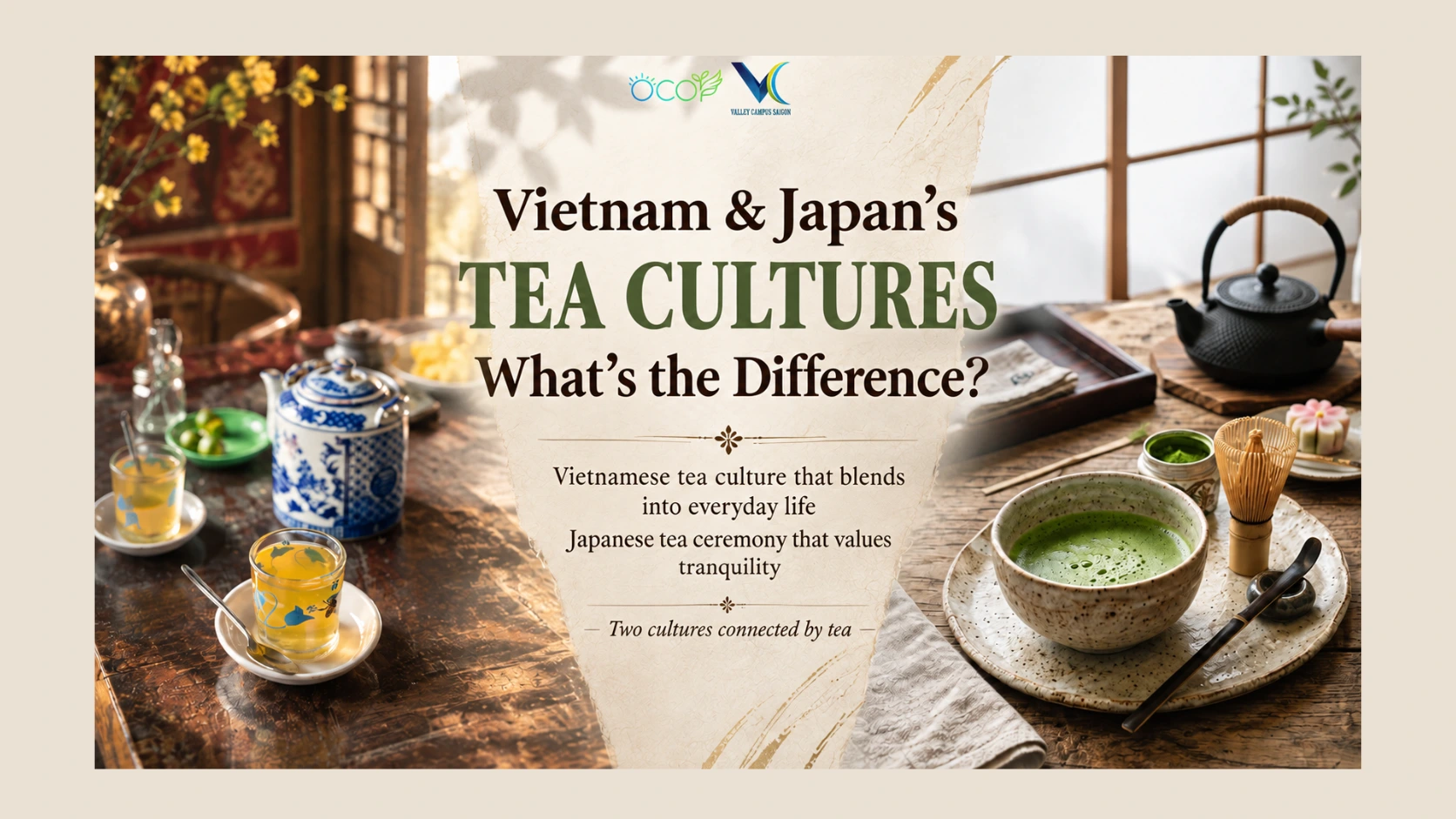
🍵 What are the differences between tea in Vietnamese and Japanese culture?
There are beverages that have transcended their role as refreshment for many decades to become a part of the culture in each country. And tea is one of them.
In Vietnam and Japan, tea has been present in daily life for a long time and still holds a special place to this day. A cup of tea can initiate a conversation among friends, serve as a greeting for esteemed guests, or simply be a moment for each person to spend on themselves.
Interestingly, even though both Vietnamese and Japanese people enjoy tea, they have very different approaches. These differences do not lie in which type of tea is better, but in how each culture imbues its own values into every cup of tea.
Vietnamese Tea – A Part of Everyday Life
In Vietnam, tea appears very naturally in life.
From urban to rural areas, the image of a teapot on the guest reception table has become familiar to many generations. A cup of tea can start a conversation, connect strangers, or simply create a cozy atmosphere within the family.
Vietnamese people drink tea in many different circumstances. It could be a hot cup of tea after a meal, a teapot on the porch in the morning, or long conversations lasting for hours among friends. Tea does not necessarily have to come with complicated rituals. What matters more is the connection between those sitting around the tea table.
Perhaps that is why Vietnamese tea culture has a very everyday color. Tea is not separate from life but blends into the very rhythm of people's daily lives.
Japanese Tea – When Tea Drinking Becomes an Art Form in Culture
If Vietnamese tea is associated with closeness and community, then Japanese tea stands out for its ritualistic nature and philosophical depth.
When mentioning Japanese tea culture, many people will immediately think of the tea ceremony (Sadō or Chadō) – the art of tea appreciation that has been preserved and developed over centuries. In the tea ceremony, every detail is executed with focus and respect: from the way tea is prepared, how the cup is held, to the manner of movement and observing the surrounding space.
However, the purpose of the tea ceremony does not lie in complex rules. The core essence is to help individuals be fully present in the moment, temporarily setting aside external distractions and finding tranquility in the mind.
For this reason, a tea ceremony is often regarded as a cultural experience rather than just a simple tea-drinking activity.
🍃 Differences in tea drinking etiquette
One of the most noticeable differences between Vietnamese and Japanese tea culture lies in the way tea is enjoyed.
Vietnamese people often see tea as a catalyst for conversations. A cup of tea appears amidst family stories, gatherings with friends, or during guest receptions. The atmosphere of tea enjoyment is usually open, natural, and connective.
In contrast, the Japanese pay much attention to the process of tea enjoyment itself. The space, tools, brewing method, and every small movement all contribute to a complete experience. Silence and focus are often valued more than lengthy conversations.
Simply put, while Vietnamese tea often directs people towards connection with those around them, Japanese tea helps individuals connect more deeply with themselves.
🌸 Tea reflects how each culture views life
Behind the differences in tea drinking lies cultural values formed over many generations.
Vietnamese tea culture reflects the spirit of hospitality, closeness, and the sense of connection among the Vietnamese people. A cup of tea is often an invitation to start a conversation, a way for people to show respect and care for one another.
In contrast, Japanese tea culture is deeply influenced by Zen philosophy. Values such as minimalism, discipline, focus, and the ability to appreciate the present moment are clearly expressed in the way the Japanese enjoy tea.
Despite their differences, both cultures share a valuable commonality: the ability to find moments of stillness amidst the busyness of life.
🌏 When tea becomes a cultural bridge
Nowadays, the boundaries between cultures are gradually narrowing.
Many Vietnamese people enjoy matcha, sencha, or Japanese green tea products. Conversely, types of tea that are deeply rooted in Vietnamese identity, such as Hue lotus tea, herbal tea, or traditional tea varieties, are also gaining attention from international friends.
Each type of tea carries the story of the land where it was created. It could be the gentle lotus fragrance of Hue, the green tea hills stretching across the mountains, or the cultural values that have been preserved through many generations.
When enjoying a cup of tea, we not only savor the flavor but also have the opportunity to explore how different cultures perceive life and the people of each country.
A cup of tea, two cultures, one shared value
Whether it's a hot cup of tea in a Vietnamese home or a traditional tea ceremony in Japan, tea always carries meanings that go far beyond a mere beverage.
It is a connection between people. It is a moment to pause amidst the busy rhythm of life. And it is also a way for each generation to preserve the cultural values that have been passed down for a long time.
Perhaps that is why, despite the many changes over time, tea continues to be present in the lives of both Vietnamese and Japanese people – as a symbol of refinement, appreciation, and the necessary moments of silence in life.
🌱 OCOP GIFT – All supplies, one platform
#OCOPGIFT #VietnameseTea #JapaneseTea #TeaEnjoyingCulture #Gifts #PremiumGifts
📌 Contact Information & Connections:
- Website: https://ocop.online
📱 Follow OCOP GIFT on social media:
Line: updating
TikTok: updating
Youtube: https://www.youtube.com/channel/UCihLVEU9hDh_Ut67l0U7bSw
Instagram: https://www.instagram.com/ocop.contact.vcs/
X (Twitter): https://x.com/ocopcontactvcs
Facebook: https://www.facebook.com/profile.php?id=61590947802312
Email: marketing@vcs-ai.com
Hotline (Japanese - Vietnamese support): +84 915 878 333
Japan Office: 神奈川県藤沢市藤沢388富士ビル 5F
Vietnam Office: 76A/3, Tran Huu Trang Street, Phu Nhuan, Ho Chi Minh City.