
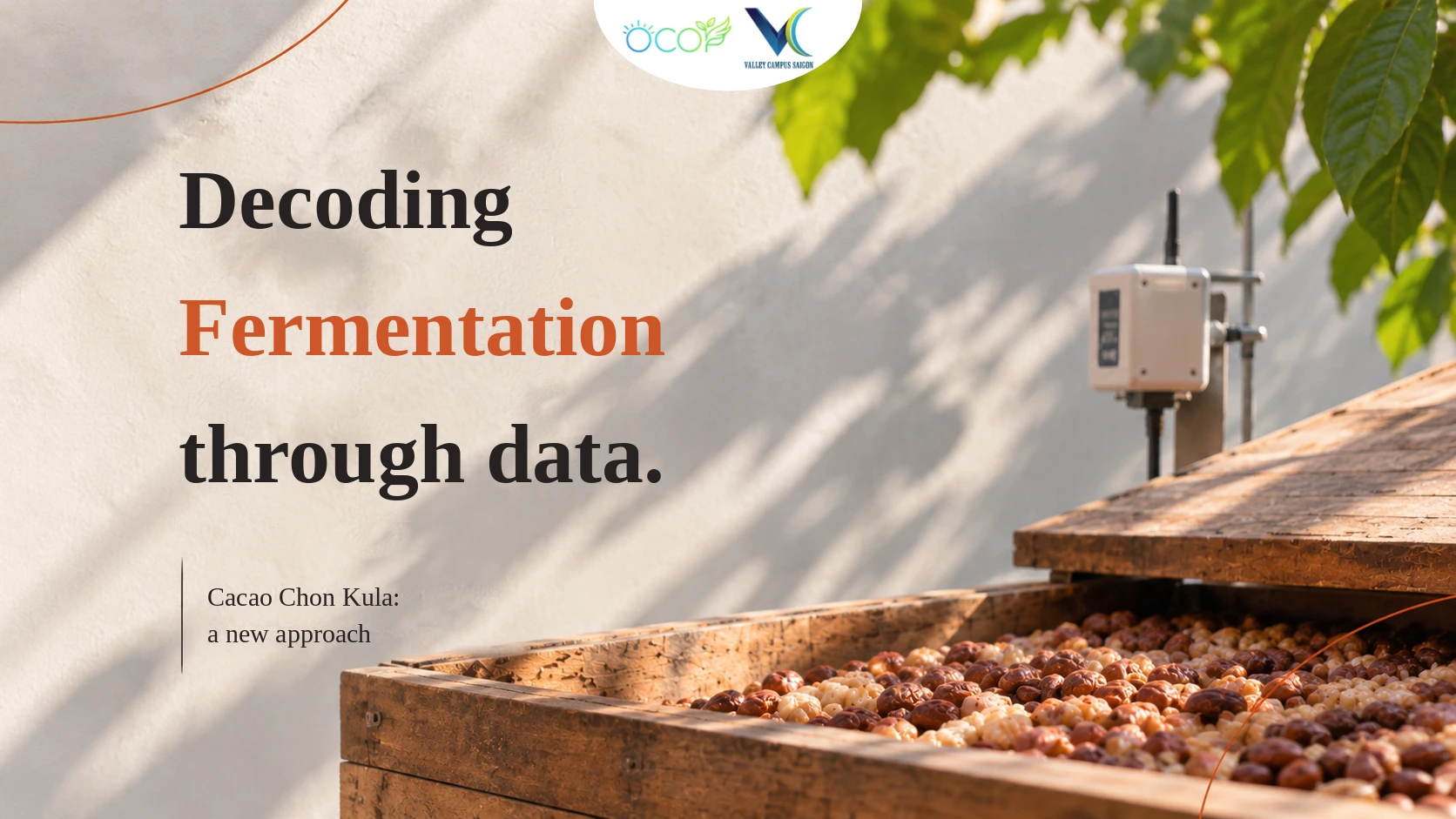
When selecting cacao for chocolate products, B2B buyers often begin by evaluating bean samples, sensory characteristics, and suitability for use in formulations. However, what can be observed in the processed raw material is only part of the story. Behind the cacao beans is the fermentation process — a stage that helps shape the foundations of the raw material’s flavor.
With Kura Civet Cacao, fermentation is approached from a different perspective: beyond evaluating the beans after processing, the process through which the raw material is developed can also be explored through data.
This approach places technology alongside post-harvest processing, broadening the ways in which the factors related to cacao characteristics can be observed and understood.
1. Cacao Fermentation — A Stage That Helps Shape Raw Material Characteristics
Fermentation is an important step in post-harvest cacao processing. During this stage, biological and chemical changes take place within the cacao mass, contributing to the formation of precursors needed for flavor development in subsequent processing stages.
The process is influenced by multiple factors, including the characteristics of the initial raw material, processing conditions, and the progression of each fermentation batch. Therefore, cacao batches do not necessarily undergo identical processes, even when handled using the same method.
Evaluating beans after fermentation helps identify certain raw material characteristics. However, when only the finished product is observed, the changes that occur during processing may not be fully reflected.
Monitoring and recording the process can therefore provide another perspective, helping operators better understand processing conditions and compare them with post-fermentation results.
2. Kura Civet Cacao — A Data-Driven Approach to Fermentation
Kura Civet Cacao is developed around an approach that combines cacao fermentation with the potential for monitoring through AI and IoT technologies.
In a model that uses sensors and a data system, information such as temperature or changes over time can be recorded to support process observation. When compared with operating conditions and raw material characteristics, this data can help those responsible gain a clearer understanding of what happens during each fermentation batch.
The notable aspect lies not only in the use of technology, but also in how data is considered in relation to the actual process.
For example, information recorded during fermentation can be examined alongside the results of evaluating the beans after processing. This combination provides a basis for exploring the relationship between fermentation conditions and raw material characteristics — rather than looking only at the final state of the cacao beans.
Nevertheless, data does not replace the role of operators or raw material evaluation. Technology serves as a tool for observation and analysis; the value of the data still depends on how it is recorded, compared, and interpreted in practice.
3. From Process Monitoring to Batch-to-Batch Comparison
When fermentation is recorded through data, cacao evaluation can expand from observing an individual batch to comparing multiple batches.
The collected information may help operators examine:
- Which conditions may influence the progression of fermentation.
- What similarities or differences exist between individual batches.
- How recorded data can be compared with the characteristics of beans after processing.
- Which information needs to be combined with sensory evaluation to better understand the raw material.
These are meaningful areas of exploration in the process of developing and refining fermentation methods. However, recording data does not in itself prove process stability or superior cacao quality.
Conclusions regarding process control, batch-to-batch consistency, or effects on flavor need to be verified through actual operational data and appropriate evaluation methods.
4. The B2B Buyer Perspective: Understanding More About the Process Behind the Beans
For chocolate manufacturers and raw material buyers, understanding post-harvest processing can provide additional information for evaluating a cacao source.
Beyond bean samples and sensory characteristics, buyers may be interested in how the raw material is processed, what information is recorded during fermentation, and whether that data can support batch-level comparison.
This information can serve as a basis for technical discussions between suppliers and partners, particularly when buyers are exploring a new raw material source.
However, process data does not replace essential evaluation steps such as roasting trials, sensory evaluation, technical documentation checks, or product application testing. Each method provides a different type of information; combining them gives buyers a more comprehensive perspective when assessing raw materials.
5. Technology as Part of Cacao Development
Kura Civet Cacao presents an approach in which technology is incorporated into the exploration and monitoring of cacao fermentation. The value of this approach lies in its ability to connect information about processing with the evaluation of post-harvest raw materials.
From a B2B perspective, this is a direction that needs to be assessed through actual data: how the process is monitored, what information is recorded, and how that data can support cacao evaluation.
For VCS’s cacao direction, understanding raw material sources, fermentation processes, and batch-specific characteristics are relevant aspects of engaging with buyers. Technology can support observation and comparison, but conclusions about quality and flavor still need to be based on evidence and actual evaluation results.
Looking at Fermentation Through Data and Actual Raw Materials
Cacao beans carry the characteristics of their raw material source while also reflecting the changes that occur during post-harvest processing. When fermentation is approached through data, the exploration of cacao can expand from evaluating the finished product to observing and comparing the processes behind it.
Kura Civet Cacao tells the story of this approach — where technology is placed alongside fermentation to provide an additional perspective on understanding raw materials.
For B2B buyers, valuable information remains information that can be verified: process data, bean characteristics, evaluation results, and suitability for intended applications. This also provides a foundation for cacao sourcing discussions to go beyond origin stories and move toward evaluating raw materials in the context of actual product development.
🌱 OCOP GIFT – All supplies, one platform
#VCSxOCOPGIFT #KuraCivetCacao #VietnameseCacao #CacaoTechnology #CacaoFermentation #CacaoB2B
📌 Contact Information & Connections:
- Website: https://ocop.online
📱 Follow OCOP GIFT on social media:
Line: updating
TikTok: updating
Youtube: https://www.youtube.com/channel/UCihLVEU9hDh_Ut67l0U7bSw
Instagram: https://www.instagram.com/ocop.contact.vcs/
X (Twitter): https://x.com/ocopcontactvcs
Facebook: https://www.facebook.com/profile.php?id=61590947802312
Email: marketing@vcs-ai.com
Hotline (Japanese - Vietnamese support): +84 915 878 333
Japan Office: 神奈川県藤沢市藤沢388富士ビル 5F
Vietnam Office: 76A/3, Tran Huu Trang Street, Phu Nhuan, Ho Chi Minh City.