
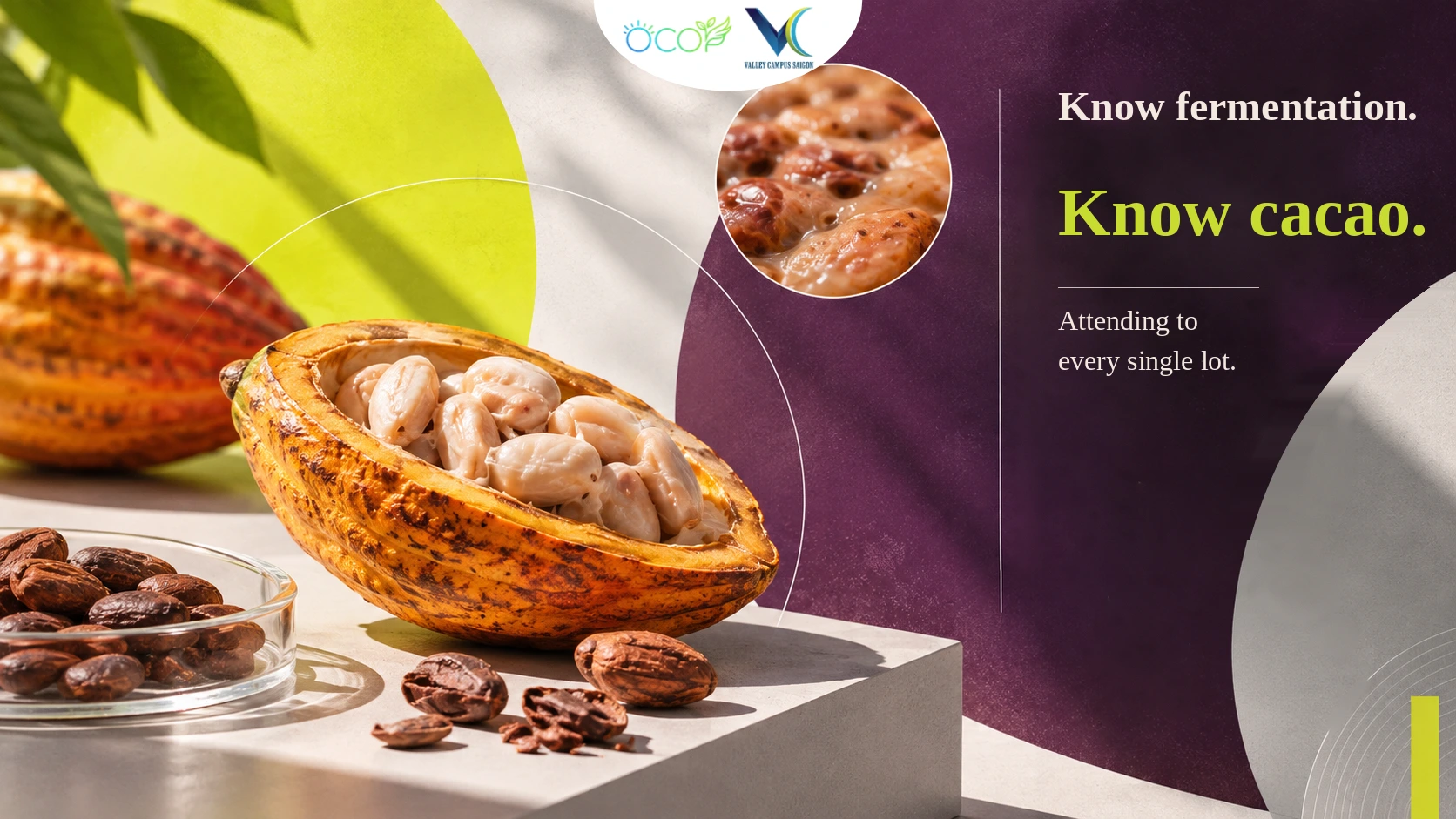
When learning about cacao, we often pay attention to its growing region, cacao variety, and the flavor characteristics of the beans. However, between the raw material at its origin and the flavor of chocolate after roasting, there is one particularly important stage: fermentation.
This is not simply a post-harvest processing step. During this stage, microbial activity and biochemical changes take place within the mass of beans, contributing to the formation of precursors essential for flavor development in subsequent chocolate-making processes.
Therefore, monitoring fermentation is not just about following the correct processing steps. Observing and recording changes in each batch also helps cacao producers better understand the raw material, identify variations, and establish a basis for evaluating the results after processing.
1. Every Cacao Batch Starts with Different Conditions
Even when cacao comes from the same growing region, the initial conditions of each batch may not be exactly the same.
The ripeness of the pods at harvest, harvesting time, bean condition, the amount of pulp surrounding the beans, and the time between pod opening and the start of fermentation can all influence the characteristics of the incoming raw materials.
In addition, environmental conditions and the way the fermentation mass is organized can also create differences. The volume of beans in each batch, the size of the fermentation mass, the container material, and heat-retention capacity can all affect the conditions inside.
As a result, even when the same processing method is used, the progression and outcome of fermentation may still vary from one batch to another.
This shows that understanding cacao should not stop at identifying its growing region or variety. To gain deeper insight into the characteristics of the raw material, it is also necessary to consider the conditions under which it develops and the post-harvest processing it undergoes.
2. Monitoring Fermentation Through Changes Within the Bean Mass
During cacao fermentation, the pulp surrounding the beans provides an environment for microbial activity. Changes in temperature, acidity, and oxygen exposure contribute to reactions taking place within the bean mass.
Each monitored factor provides a different perspective on the condition of the fermentation batch.
Temperature – Observing How the Process Develops
The temperature inside the fermentation mass changes in response to microbial activity and the conditions of each batch. Recording temperature over time helps producers monitor the process, identify notable changes, and gain additional information for evaluating fermentation.
Time – Assessing the Extent of Bean Transformation
Fermentation time is related to the extent of changes occurring in the beans. However, there is no single fixed duration suitable for every type of raw material and processing method. The endpoint should be determined based on the characteristics of the incoming beans, fermentation conditions, and actual inspection results.
Turning – Changing Conditions Within the Fermentation Mass
Turning helps redistribute the beans and changes their level of oxygen exposure within the fermentation mass. The frequency and timing of turning should be considered in relation to the processing method, batch size, and actual fermentation progress.
Acidity and Other Signs of Change – Providing Additional Information About Bean Conditions
Changes in acidity can provide further insight into the transformations taking place during fermentation. When considered alongside temperature, time, and bean condition, this factor helps producers develop a more complete understanding of each batch.
These parameters should not be considered in isolation. They need to be examined in relation to one another and to the initial conditions of the raw materials. This way, monitoring goes beyond simply recording numbers and can also support practical evaluation.
3. Recording Data to Understand Differences Between Batches
One important benefit of monitoring fermentation is the ability to retain information for comparison.
If producers rely solely on experience or sensory impressions after fermentation is complete, they may recognize that a batch has produced a different result but find it difficult to determine which conditions need further investigation.
By contrast, when information is systematically recorded for each batch, evaluation can be based on more specific evidence.
A fermentation monitoring record may include:
- Incoming raw material information: Batch ID, raw material source, harvest time, and bean condition.
- Processing conditions: Fermentation method, bean volume, equipment, or container material.
- Monitoring parameters: Temperature over time, turning schedule, and other observations related to process progression.
- Post-fermentation information: Fermentation completion time, bean condition, and inspection records.
- Post-processing results: Drying information, moisture content, and sensory evaluation results after test roasting.
For example, two cacao batches from the same source but with different temperature profiles or processing conditions can be compared side by side. The condition of the beans after drying and their sensory evaluation results can then provide additional information for understanding the relationship between processing conditions and raw material characteristics.
Recorded data does not automatically prove that a single factor is the sole cause of a particular difference. However, it provides a basis for asking questions, testing hypotheses, and considering necessary adjustments in subsequent batches.
4. From Fermentation Data to Cacao Supply Evaluation
For B2B cacao sourcing, variations between raw material batches are an important consideration for chocolate manufacturers.
A cacao sample that delivers good sensory results during an initial evaluation is not enough to guarantee that subsequent batches will have similar characteristics. To gain a clearer understanding of a raw material source, manufacturers need to consider both sample testing results and information about origin and processing.
This is where batch monitoring records become valuable. When each batch has its own identification code and processing information, suppliers have a stronger basis for:
- Comparing processing conditions across cacao batches.
- Monitoring differences in bean characteristics after fermentation and drying.
- Combining process information with technical inspection results and sensory evaluation.
- Communicating more clearly with customers about the characteristics and accompanying information of each raw material batch.
For chocolate manufacturers, this information supports the process of understanding and selecting cacao sources. Evaluation can go beyond the flavor of a test sample to also consider how the raw material was processed and how complete its supporting records are.
However, monitoring differences between batches does not mean that every cacao batch must produce exactly the same results. What matters more is identifying these differences, having information to explain them, and evaluating whether the raw material meets production requirements.
5. Connecting Processing Information with the Story of Origin
Information about the growing region tells us where cacao comes from. But to understand the raw material more deeply, it is necessary to connect its origin with what happens after the pods are harvested.
Two cacao batches may come from the same area but differ in harvest timing, initial conditions, and processing methods. Conversely, cacao from different sources can also be evaluated using the same set of criteria to identify similarities and differences.
Therefore, the story of origin should not stop at the name of a location. When combined with post-harvest processing records, fermentation data, and raw material evaluation results, origin information becomes more comprehensive and useful for sourcing and manufacturing partners.
With cacao sourced from Cát Tiên and Châu Đức, VCSxOCOPGIFT aims to understand raw materials through individual samples and batches, combining origin information with their characteristics and post-harvest processing history.
This approach provides an information-based foundation for business customers to explore, compare, and evaluate Vietnamese cacao before conducting production trials.
Understanding the Process to Better Understand Every Cacao Batch
Fermentation control is not simply about monitoring temperature and time or recording technical parameters. Its value lies in the ability to connect data with raw material characteristics and post-processing results.
Every cacao batch begins under its own set of conditions. By learning how to observe, record, and compare, cacao producers can better understand variations between batches, identify factors that require attention, and establish a basis for improving their processes.
For chocolate manufacturers, this information also makes the process of exploring raw material sources clearer before selecting cacao and incorporating it into product development.
Because understanding a cacao source is not just about knowing where the beans come from, but also about understanding what happens throughout the process that shapes the characteristics of each batch.
🌱 OCOP GIFT – All supplies, one platform
#VCSxOCOPGIFT #VietnameseCacao #CacaoFermentation #CacaoOrigin #CacaoQuality
📌 Contact Information & Connections:
- Website: https://ocop.online
📱 Follow OCOP GIFT on social media:
Line: updating
TikTok: updating
Youtube: https://www.youtube.com/channel/UCihLVEU9hDh_Ut67l0U7bSw
Instagram: https://www.instagram.com/ocop.contact.vcs/
X (Twitter): https://x.com/ocopcontactvcs
Facebook: https://www.facebook.com/profile.php?id=61590947802312
Email: marketing@vcs-ai.com
Hotline (Japanese - Vietnamese support): +84 915 878 333
Japan Office: 神奈川県藤沢市藤沢388富士ビル 5F
Vietnam Office: 76A/3, Tran Huu Trang Street, Phu Nhuan, Ho Chi Minh City.