
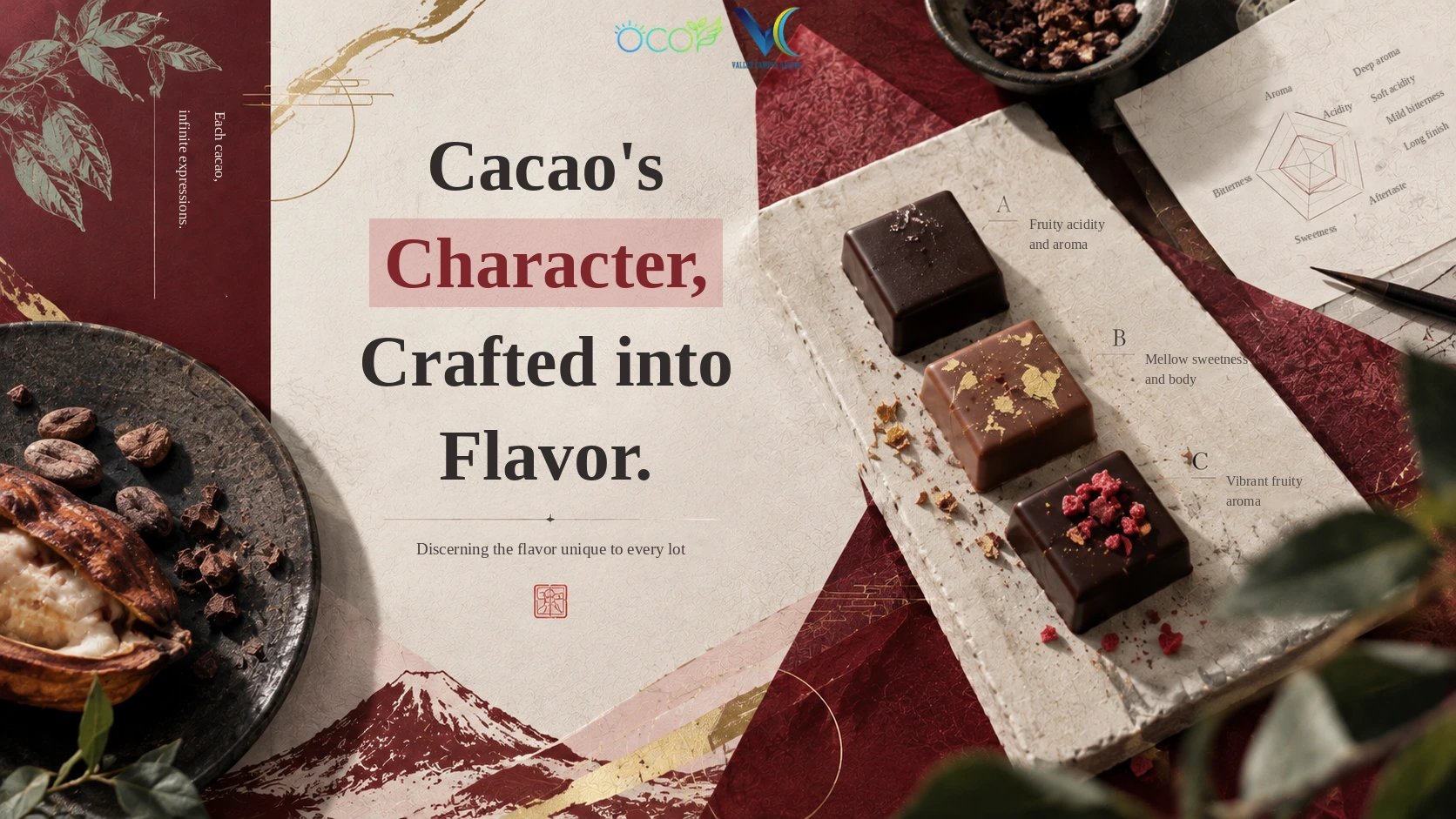
In chocolate development, a batch of cacao with a distinctive aroma is not necessarily the most suitable choice. What matters is not only the characteristics of the cacao beans, but also whether those characteristics align with the flavor profile the product aims to achieve.
A dark chocolate line designed to highlight the distinctive characteristics of cacao will have different ingredient requirements from milk chocolate or chocolate combined with fruit. Therefore, rather than simply searching for the batch considered to be the best, product developers need to understand the flavor profile of each batch and its potential applications in actual formulations.
Each Cacao Batch Has Its Own Flavor Profile
A flavor profile is a collection of sensory characteristics that can be identified when evaluating cacao, such as cacao aroma intensity, acidity, bitterness, astringency, aftertaste, and notes reminiscent of fruit, flowers, roasted nuts, or caramel.
These characteristics do not depend solely on the variety and growing conditions. Harvesting, fermentation, drying, storage, and roasting also contribute to shaping the flavor of the raw material and the finished chocolate.
As a result, two cacao batches from the same growing region can still produce different sensory results. Even when the same recipe is used, changes in the input ingredients can alter the acidity, bitterness, or aroma intensity of the chocolate.
For product developers, the question should not simply be “Which cacao batch tastes better?” but rather “Which cacao batch is better suited to the flavor profile we want to create?”
Selecting Cacao Based on the Direction of Each Chocolate Line
Each chocolate line has its own flavor objectives. Ingredient selection should be based on the desired characteristics of the finished product rather than applying a single criterion to all products.
1. Dark Chocolate: Highlighting the Distinctive Characteristics of Cacao
Dark chocolate can clearly express the characteristics of cacao, depending on the cacao content and processing formula.
If the goal is to create a product with a prominent cacao aroma and recognizable complementary notes, developers need to carefully evaluate the aroma intensity, acidity, bitterness, and astringency of the raw material.
These characteristics can add depth to chocolate when well balanced. Conversely, if they do not align with the intended product profile, they may make the flavor too harsh or unbalanced.
2. Milk Chocolate: Balancing Cacao with Other Ingredients
In milk chocolate, the final flavor develops through the combination of cacao, milk, sugar, and other ingredients in the formulation.
Therefore, a cacao batch does not necessarily need to have the most complex flavor profile to be suitable. What matters is whether the raw material can deliver a cacao character that harmonizes with the sweetness and richness of the other ingredients.
This compatibility needs to be evaluated through formulation trials, as both ingredient ratios and processing conditions can change the tasting experience.
3. Chocolate Combined with Fruit: Finding Compatibility Between Flavors
When developing chocolate combined with mango, strawberries, or other fruits, product developers need to consider the relationship between the cacao flavor and the accompanying ingredients.
For example, fruit acidity can create different tasting experiences when paired with chocolate varieties that have different levels of acidity and aroma intensity.
There is no single cacao profile that works with every type of fruit. A more effective approach is to conduct direct formulation trials to evaluate the harmony, aroma intensity, and aftertaste of the finished product.
Choosing the right raw material starts with the experience you want to create, followed by identifying the cacao batch and formulation that best meet that goal.
Why Origin Alone Is Not Enough to Select Cacao
Geographical origin provides important information about the growing region, natural conditions, and characteristics of the raw material. However, the name of a region cannot replace an assessment of the quality of each individual bean batch.
Climate, soil, and cacao variety can create initial differences. After harvesting, fermentation, drying, and storage continue to influence bean characteristics. Therefore, cacao batches from the same area can still produce different sensory results.
To make more informed ingredient selections, businesses need to combine origin information with post-harvest processing data, relevant quality indicators, and sensory evaluation results.
This approach helps ensure that selections are based on the actual characteristics of the raw material rather than expectations associated with a particular growing region.
Sensory Evaluation: The Link Between Cacao Beans and Finished Chocolate
To determine whether a cacao batch aligns with the intended product direction, tasting should follow consistent criteria rather than relying on general descriptions such as “good,” “bitter,” or “aromatic.”
Several factors can be considered:
Cacao aroma intensity: How pronounced is the cacao aroma?
- Acidity: Is it suitable for the product's intended flavor profile?
- Bitterness and astringency: Are these characteristics well balanced?
- Complementary flavor notes: Are there nuances reminiscent of fruit, flowers, roasted nuts, or caramel?
- Aftertaste: How does the flavor linger after tasting?
The criteria should be selected according to the product development objectives and compared under relatively consistent testing conditions.
One important point is that the flavor of fermented cacao beans is not entirely the same as that of finished chocolate. Roasting and subsequent processing stages continue to alter the flavor profile. Therefore, raw material evaluation needs to go hand in hand with testing actual chocolate formulations.
From Ingredient Selection to Quality Control Across Batches
Once a suitable formulation has been identified, another challenge is maintaining product characteristics as the raw material supply changes over time.
If a new cacao batch has different levels of acidity, bitterness, or aroma intensity compared with the batch used to develop the formulation, the finished chocolate may also change.
To minimize these variations, businesses can establish ingredient selection criteria based on flavor profiles, origin information, post-harvest processing conditions, and necessary quality indicators. When a new batch arrives, reevaluation and testing help determine whether the raw material meets current requirements or whether the formulation or processing conditions need to be adjusted.
In addition, systematically recording information about raw materials, processing procedures, and evaluation results allows product developers to compare cacao batches more easily, monitor differences, and investigate their causes.
Technology can support this data management process, but it does not replace raw material inspection and sensory evaluation. The value of data lies in its ability to provide an additional basis for product development decisions.
When Cacao Selection Becomes Part of Product Development Strategy
For made-to-order chocolate products, cacao selection is not merely a step in purchasing raw materials. It is also a decision that affects the formulation, flavor experience, and quality requirements of the finished product.
At VCS x OCOP GIFT, exploring cacao ingredients, processing technologies, and opportunities to develop new chocolate products represents an approach to connecting raw material characteristics with finished product requirements.
Rather than assuming that one cacao batch can suit every chocolate line, product development should begin by defining the target flavor profile, evaluating the raw material, and validating its suitability through practical testing.
This approach is particularly useful when developing chocolate lines with distinct flavor directions or made-to-order products, as every ingredient selection needs to serve a specific formulation objective.
Conclusion: Choosing the Right Cacao Means Choosing the Right Flavor Direction
Differences between cacao batches are not merely variations that need to be minimized. When properly identified and evaluated, these differences can open up more possibilities in chocolate development.
A cacao batch with multiple layers of flavor is not necessarily suitable for every product. What matters is understanding the characteristics of the raw material, defining the desired flavor profile, and validating its suitability through testing.
Because a good cacao batch is not necessarily the one with the most complex flavor notes, but the one that best matches the flavor the product aims to express.
🌱 OCOP GIFT – All supplies, one platform
#OCOPGIFT #CacaoFlavor #VietnameseCacao #GiftGiving #PremiumGifts
📌 Contact Information & Connections:
- Website: https://ocop.online
📱 Follow OCOP GIFT on social media:
Line: updating
TikTok: updating
Youtube: https://www.youtube.com/channel/UCihLVEU9hDh_Ut67l0U7bSw
Instagram: https://www.instagram.com/ocop.contact.vcs/
X (Twitter): https://x.com/ocopcontactvcs
Facebook: https://www.facebook.com/profile.php?id=61590947802312
Email: marketing@vcs-ai.com
Hotline (Japanese - Vietnamese support): +84 915 878 333
Japan Office: 神奈川県藤沢市藤沢388富士ビル 5F
Vietnam Office: 76A/3, Tran Huu Trang Street, Phu Nhuan, Ho Chi Minh City.