
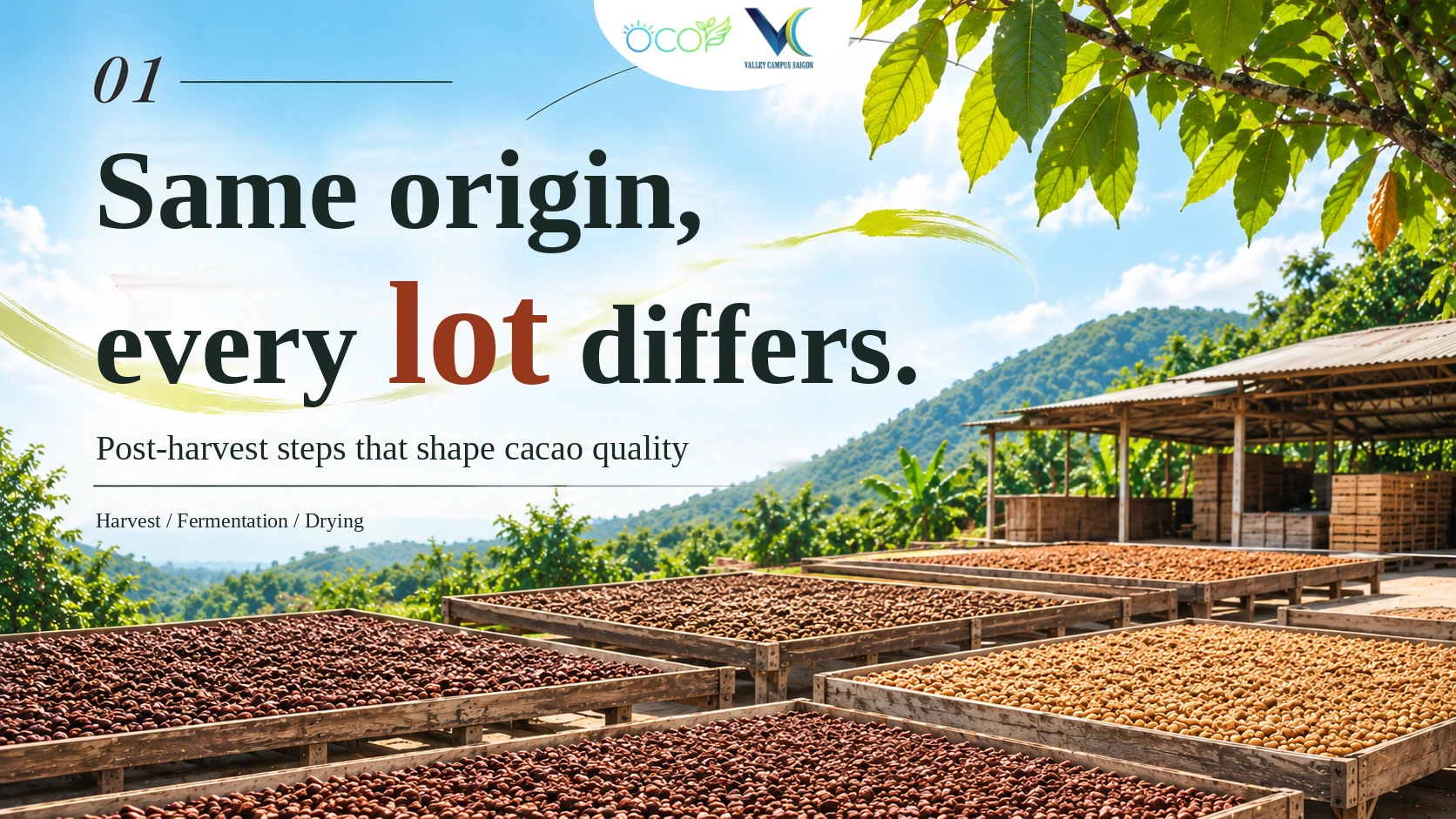
When sourcing cacao, chocolate manufacturers often pay attention to the growing region, cacao variety, post-harvest processing methods, and the flavor characteristics of the raw material. However, one interesting point is that even cacao from the same growing region can show certain differences from one batch to another.
These differences do not necessarily stem from the cacao variety or geographical conditions. They can also develop throughout each post-harvest stage, from the timing of harvest and the organization of fermentation to drying methods and storage conditions.
In other words, sourcing cacao from the same region does not mean that every batch will have identical characteristics.
So, what factors contribute to these differences?
1. Harvest Timing: Quality Begins with the Raw Material
Before cacao beans undergo processing, the ripeness of the pods at harvest is already an important factor to consider.
Cacao pods need to reach an appropriate level of maturity to provide favorable conditions for subsequent post-harvest processing. If the incoming raw materials include pods at different stages of ripeness, the condition of the beans and the surrounding pulp may also vary.
This is particularly important because the pulp provides essential components for fermentation. When the characteristics of the incoming raw materials change, fermentation conditions and progression may also be affected.
Therefore, pod selection, raw material grading, and harvesting at the right time are the first steps in helping reduce inconsistencies between cacao batches.
2. Fermentation: One of the Key Factors Behind Flavor Differences
After being removed from the pods, cacao beans together with their surrounding pulp are taken through fermentation. This stage involves various biochemical changes that contribute to the development of flavor precursors for subsequent roasting and chocolate-making processes.
During fermentation, different groups of microorganisms, including yeasts, lactic acid bacteria, and acetic acid bacteria, participate in various reactions. Their activity contributes to heat generation, acid production, and the formation of compounds that influence the internal structure and characteristics of the beans.
However, fermentation does not always proceed in exactly the same way. Several factors can cause differences in the results between batches:
- Fermentation time: Influences the progression and extent of changes in the beans throughout the process.
- Temperature: Affects microbial activity and the rate of biochemical changes.
- Raw material volume: Influences heat retention and fermentation conditions within the mass of beans.
- Turning and oxygen exposure: Affect the distribution of heat and oxygen, as well as the conditions under which different groups of microorganisms operate.
These factors are interconnected, so even changing a single condition can affect the overall progression of fermentation.
This is why two batches of cacao from the same growing region can still produce different fermentation results and sensory characteristics. Monitoring process parameters helps producers better understand what happens to each batch of beans.
3. Drying: More Than Just Reducing Moisture
After fermentation, cacao beans need to be dried to reduce their moisture content to a suitable level for storage and transportation.
However, the effectiveness of this stage depends on more than just the final moisture content. Drying speed, temperature, ventilation, and environmental conditions also need to be considered.
If drying is not properly managed, the beans may dry unevenly or fail to reach the condition required for storage. Conversely, prolonged drying under humid and poorly ventilated conditions may increase the risk of mold development.
Therefore, checking moisture content and monitoring the condition of the beans after drying are important steps in evaluating the quality of each batch.
4. Storage and Transportation: Maintaining Quality Throughout the Journey
Even after fermentation and drying have been completed, cacao beans can still be affected by environmental conditions during storage and transportation.
Humidity, temperature, ventilation, and packaging methods are all factors that need to be controlled. Improper storage may cause the beans to absorb moisture, develop mold, or pick up unwanted odors from their surroundings.
For chocolate manufacturers, this is an important consideration because raw materials need to maintain suitable conditions from the moment they leave the supplying region until they arrive at the processing facility.
A batch of cacao that has been properly processed may still encounter quality issues before reaching its intended user if it is not stored correctly.
5. What Do Differences Between Cacao Batches Mean for Chocolate Manufacturers?
In chocolate production, differences between cacao batches do not necessarily indicate poor quality. Some variations may create distinctive sensory characteristics, while others may affect the suitability and consistency of the raw material.
What matters is that manufacturers understand these differences so they can determine whether a particular batch meets their product requirements.
By evaluating each batch, manufacturers can:
- Compare sensory characteristics: Identify variations in aroma, acidity, bitterness, astringency, and aftertaste between samples.
- Inspect raw material conditions: Assess moisture content, defect rate, bean condition, and other relevant technical parameters.
- Monitor quality variations: Compare information across batches to better understand how quality changes from one supply to another.
- Select suitable raw materials: Consider how each batch can be used in different chocolate product lines and production recipes.
For example, a cacao sample may perform well during an initial test roast. However, for long-term use in production, manufacturers also need to understand whether subsequent batches can maintain the key characteristics they require.
Therefore, a suitable cacao source needs more than just a good sample. It also requires clear information that allows all parties to monitor and evaluate quality across multiple batches.
6. From Origin to Individual Batches: VCSxOCOPGIFT's Approach
With Cát Tiên as its main cacao sourcing region and Châu Đức as a supplementary source, VCSxOCOPGIFT aims to understand raw materials through individual samples and batches, rather than assuming that cacao from the same growing region will always have identical characteristics.
Combining origin information, post-harvest processing data, and raw material evaluation results gives all parties a stronger basis for identifying differences between cacao batches.
In addition, the development direction of the Cacao Chồn Kura fermentation system, which applies AI/IoT technology, opens up a new approach to monitoring processing conditions. By collecting data on operating parameters, the system can support the observation of fermentation progress and provide additional information for future process analysis and adjustments.
For chocolate manufacturing partners, this information not only helps them better understand where the cacao comes from, but also provides insight into how the raw material is processed and evaluated before being used in production trials.
A reliable cacao source is not defined solely by the quality of a single batch, but also by the ability to monitor, compare, and understand variations across multiple batches of raw materials.
📩 VCSxOCOPGIFT aims to connect Vietnamese cacao sources with chocolate manufacturers, Bean-to-Bar makers, and raw material partners in Japan. Contact us to discuss your sourcing needs and explore cacao samples that may be suitable for your production requirements.
🌱 OCOP GIFT – All supplies, one platform
#VCSxOCOPGIFT #VietnameseCacao #CacaoFermentation #CacaoQuality #CacaoSourcing
📌 Contact Information & Connections:
- Website: https://ocop.online
📱 Follow OCOP GIFT on social media:
Line: updating
TikTok: updating
Youtube: https://www.youtube.com/channel/UCihLVEU9hDh_Ut67l0U7bSw
Instagram: https://www.instagram.com/ocop.contact.vcs/
X (Twitter): https://x.com/ocopcontactvcs
Facebook: https://www.facebook.com/profile.php?id=61590947802312
Email: marketing@vcs-ai.com
Hotline (Japanese - Vietnamese support): +84 915 878 333
Japan Office: 神奈川県藤沢市藤沢388富士ビル 5F
Vietnam Office: 76A/3, Tran Huu Trang Street, Phu Nhuan, Ho Chi Minh City.