
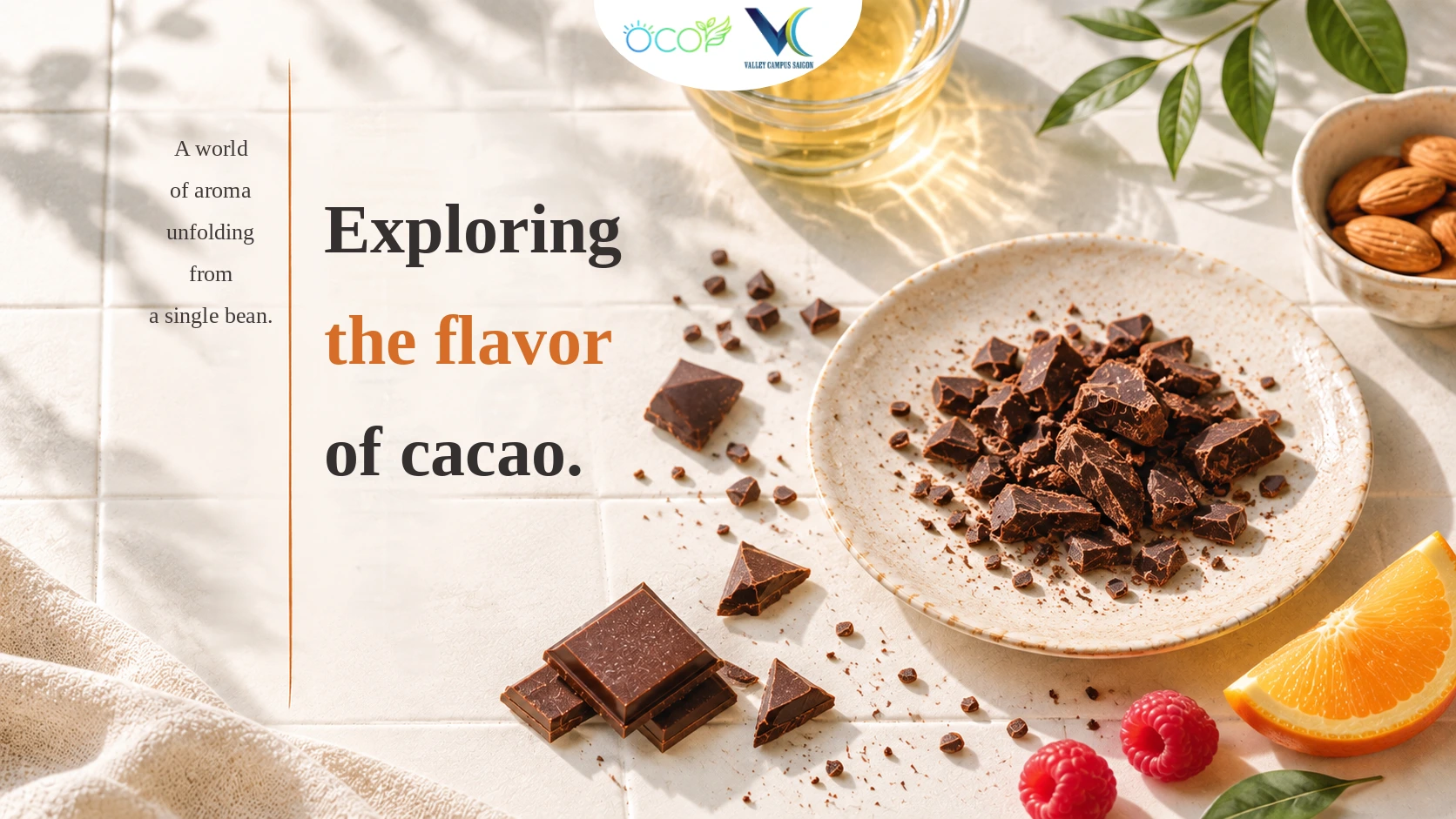
When exploring cacao, we often begin with its growing region, variety, harvest season, or fermentation method. These are all factors that contribute to the characteristics of the raw material. However, to truly understand what makes a cacao sample different, we need to look beyond its origin information and the visible appearance of the beans.
The aroma released when opening a sample, the acidity experienced during tasting, the bitterness that lingers, and the sensations in the aftertaste can all reveal more about the raw material. This is why Sensory Evaluation plays an important role in understanding and selecting cacao.
Through observation, smelling, and tasting, evaluators can identify the flavor characteristics of each sample, gaining a clearer understanding of its sensory quality and potential applications in chocolate production.
1. Exploring Flavor Profiles Through the Characteristics of Cacao
Sensory evaluation is the process of using the senses to identify and describe the characteristics of a raw material. For cacao, smell and taste are particularly important because they help identify flavor nuances that may not be apparent from the beans' shape or color.
A cacao sample is typically assessed based on several key characteristics:
- Aroma: May evoke notes of fruit, flowers, nuts, caramel, or roasted cacao. This is one of the factors that gives each raw material sample its distinctive character.
- Acidity: Refers to the intensity and character of acidity, such as notes reminiscent of fresh fruit or citrus.
- Bitterness: A characteristic that needs to be evaluated alongside other factors to understand the overall flavor balance.
- Astringency: Creates a dry or puckering sensation in the mouth, which can influence the chocolate tasting experience.
- Aftertaste: Refers to the sensations that remain after tasting, helping evaluators identify the persistence and nuances of the flavor.
What is particularly noteworthy is that these characteristics interact with one another. One cacao sample may stand out for its fruity aroma and pronounced acidity, while another may lean toward roasted cacao notes, bitterness, and a lingering aftertaste.
The combination of these elements creates a Flavor Profile — an overall picture of a cacao sample's flavor characteristics. This also provides a basis for distinguishing raw material samples and exploring their potential applications.
2. Which Processing Stages Shape Cacao Flavor?
What we perceive when tasting cacao does not come solely from its variety or growing region. Flavor results from multiple factors that influence the beans throughout their development, harvesting, and processing.
Raw Material Origin and Growing Conditions
Cacao variety, soil conditions, climate, and farming practices can all contribute to the beans' initial characteristics. In addition, the ripeness of the pods at harvest is another factor worth considering, as the quality of the incoming raw material can influence subsequent processing stages.
Fermentation – An Important Stage in Flavor Precursor Development
After being removed from the pods, cacao beans undergo fermentation. During this stage, biochemical changes take place inside the beans, contributing to the formation of precursors needed for flavor development in later processing stages.
Fermentation time, temperature, turning practices, and environmental conditions can all influence the outcome. Therefore, monitoring and recording the fermentation process is important when evaluating differences between batches of raw materials.
Drying and Storage – Maintaining Raw Material Condition
After fermentation, cacao beans need to be dried to an appropriate moisture level. If drying or storage conditions are not properly controlled, the beans may be affected in terms of their condition, quality, and aromatic characteristics.
This is why understanding cacao should not stop at fermentation information alone. Subsequent processing and storage conditions also need to be considered.
Roasting Trials – Revealing Flavor Characteristics
Roasting is the stage that helps develop many of the characteristic aroma compounds of chocolate. Temperature, time, and roasting methods can change how flavor notes are expressed, meaning that the same raw material sample may produce different sensory results under different roasting conditions.
Therefore, recording roasting trial conditions is also essential when evaluating cacao. This helps establish a clearer basis for comparing results across samples, rather than relying solely on individual impressions.
It is clear that the flavor of a cacao sample does not result from just one processing stage. It reflects the connection between the raw material source, post-harvest processes, and how the beans are handled before becoming chocolate ingredients.
3. From Flavor Profiles to Chocolate Applications
For chocolate manufacturers, identifying flavor characteristics is not simply about describing how cacao smells or tastes. More importantly, these characteristics need to be considered in relation to the products they intend to develop.
For example, several flavor groups are commonly considered when selecting raw materials:
- Fruity Notes: Notes reminiscent of red fruits, citrus, or tropical fruits may be considered for chocolate products intended to highlight fruity characteristics.
- Nutty Notes: Associations with almonds or hazelnuts can complement formulations that combine cacao with roasted nuts.
- Nutty Notes: Associations with almonds or hazelnuts can complement formulations that combine cacao with roasted nuts.
- Caramel and Brown Sugar Notes: These may contribute a warm sweetness, complementing formulations that aim for harmony between cacao and other ingredients.
- Roasted Cacao Notes: Distinct cacao characteristics, combined with bitterness and aftertaste, are often considered when developing dark chocolate or products that emphasize the character of the raw material.
However, these are common sensory descriptors, not fixed characteristics of every cacao sample. A raw material sample does not necessarily belong to just one flavor group.
Practical applications also depend on cacao content, blending formulas, roasting methods, and the intended characteristics of the finished product. Therefore, sensory evaluation results should be combined with processing trials to determine whether the raw material is genuinely suitable for the intended product line.
4. Why Is Sensory Evaluation Important for Business Customers?
When looking for a new cacao supply source, manufacturers are not only interested in where the raw material comes from. They also need to understand the characteristics of each sample, differences between batches, and the ability of the raw material to meet production requirements.
In this process, sensory evaluation can support several key activities:
Comparing Raw Material Samples
Using the same evaluation method and sensory description system helps identify similarities and differences between cacao samples. This provides an initial basis for selecting samples that require further testing.
Guiding Product Development
Through flavor profiles, manufacturers can consider which cacao samples are suitable for the chocolate lines they are developing, from pure dark chocolate to products combined with fruit, nuts, or other ingredients.
Monitoring Differences Between Raw Material Batches
Recording sensory evaluation results for each batch provides additional information for comparison and discussion, as well as for investigating possible causes when flavor differences arise.
Supporting Raw Material Selection and Supplier Collaboration
A raw material profile containing information about origin, physical characteristics, processing conditions, and sensory evaluation results can make discussions between suppliers and manufacturers more specific. Rather than describing cacao through general observations alone, both parties can use data and sample testing results to discuss actual requirements.
Nevertheless, it is important to note that sensory evaluation does not replace technical specifications such as moisture content, defective bean ratios, or food safety requirements. These are complementary sets of information that contribute to a more comprehensive raw material assessment.
5. Connecting Growing Region Stories with the Sensory Value of Vietnamese Cacao
For Vietnamese cacao, each growing region and bean batch offers a starting point for exploring distinctive characteristics. However, information about growing regions becomes more meaningful when connected with processing data and actual evaluation results.
With cacao sourced from Cát Tiên and Châu Đức, VCSxOCOPGIFT aims to explore raw materials by individual samples and batches, combining information about bean characteristics, post-harvest processing, and sensory evaluation results.
This approach helps build clearer raw material profiles while providing business customers with a basis for exploring, comparing, and considering the potential applications of Vietnamese cacao in different chocolate product lines.
Behind every flavor experienced during tasting lies an entire journey of the raw material: from where the beans are grown, to how they are harvested and fermented, and finally through roasting trials and evaluation. When this information is connected, the story of cacao becomes more than just a story of origin. It also becomes a story of the characteristics and value that the raw material can bring to the finished product.
At VCSxOCOPGIFT, sensory evaluation is part of the journey of exploring Vietnamese cacao — connecting the characteristics of each raw material sample with business customers' chocolate product development needs.
🌱 OCOP GIFT – All supplies, one platform
#VCSxOCOPGIFT #VietnameseCacao #CacaoFlavor #CacaoQuality #PureChocolate
📌 Contact Information & Connections:
- Website: https://ocop.online
📱 Follow OCOP GIFT on social media:
Line: updating
TikTok: updating
Youtube: https://www.youtube.com/channel/UCihLVEU9hDh_Ut67l0U7bSw
Instagram: https://www.instagram.com/ocop.contact.vcs/
X (Twitter): https://x.com/ocopcontactvcs
Facebook: https://www.facebook.com/profile.php?id=61590947802312
Email: marketing@vcs-ai.com
Hotline (Japanese - Vietnamese support): +84 915 878 333
Japan Office: 神奈川県藤沢市藤沢388富士ビル 5F
Vietnam Office: 76A/3, Tran Huu Trang Street, Phu Nhuan, Ho Chi Minh City.